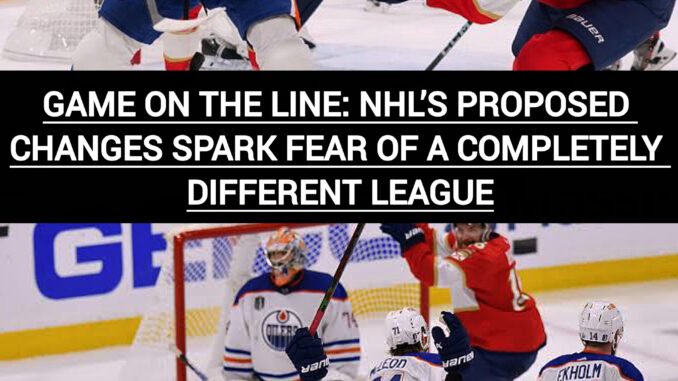
It’s always exciting to suggest ways to make the NHL a better and more enjoyable league. Here are eight strong rule changes that THN.com believes should be talked about during the next GM meetings.
The yearly meetings with the GMs just wrapped up on Wednesday in Manaplan, Florida, and it’s always interesting to find out what they talked about.
This week, they focused on a few things like the video review system, goal interference issues, the new playoff salary cap, allowing 19-year-old CHL players to join the AHL, neck guards, and more.
Most people involved in hockey will quickly tell you that they believe the sport is doing really well right now. Even George Parros, who is in charge of Player Safety in the NHL, mentioned this week that he agrees.
However, there’s always a chance to make things better, and suggesting ideas leads to great conversations and debates.
So, what changes do we think should happen in the NHL? We asked some THN writers and editors, and we came up with eight ideas. They are not in any special order.
1. The ‘Eye-In-The-Sky’ Official
This is an idea we’ve been supporting for a long time, and it’s starting to get noticed.
This change would mean having an NHL official watching from the stands, who could stop the game and call penalties that the referees on the ice might have missed.
It would take some getting used to, but because the game moves so fast, the referees sometimes miss calls. Having an ‘eye-in-the-sky’ official would help make sure that all calls are made correctly.
2. Changing the NHL’s Points System and Playoff Seedings
Giving extra points to teams that win in regulation would reward them for sticking to the traditional 5-on-5 style of play.
Changing the way playoff teams are arranged to rank each team from first to eighth based on their total points would create a fairer setup that gives credit to teams for having a good regular season.
Right now, the teams that come in second and third in each division compete against each other in the opening round, while the division finals take place in the next round. If one division is scoring a lot more points than another in the conference – we’re looking at you, Central and Pacific – it means two strong teams that could win the Cup might face off in the first round instead of meeting in the later rounds.
3. More Overtime, More Overtime Players
The NHL’s overtime setup of 3-on-3 players for five minutes has worked well to reduce the number of games ending in shootouts.
Last year, 71.6 percent of games that went into overtime finished before needing a shootout, which is a new high. This year, that number is at 64.6 percent, which is still much better than the old 4-on-4 overtime, where less than half of the games ended before a shootout took place.
Many people would agree that having fewer shootouts is a good outcome with this method. However, if we want something more like 5-on-5 hockey, the league should consider adding five more minutes to overtime and putting one more player on each team, turning it back into 4-on-4.
Right now, when there’s overtime in 3-on-3 hockey, it usually turns into a bunch of 2-on-1 breakaways or players just standing around at center ice. If coaches could have a fourth player on the ice, it might slow the game down a bit, but it would also create a more teamwork-focused way to end the game.
4. The Over-And-Back Rule
This is a rule that the Champions League has adopted, and it makes a lot of sense to us.
Making sure players with the puck cannot go back into the neutral zone during overtime pushes them to be more active and make plays instead of playing it safe, which can be boring for fans.
5. The ‘Jailbreak’ Rule
This rule is in the PWHL, where a team that is shorthanded can stop their penalty kill by scoring a goal. Many NHL players like this rule, and it’s easy to understand why. It doesn’t change the game too much, but it encourages teams to have their best players out even when they are down a man. This would be great for the sport as it tries to highlight the influence of star players.
6. The ‘Gold Plan’
Adam Gold introduced this concept in 2012 at a conference about sports stats, and the PWHL decided to use it before their first season.
Some NHL fans aren’t fans of teams trying to lose on purpose to get a better draft pick.
Under the Gold Plan, teams that get knocked out from the Stanley Cup playoffs would still need to play competitively. The teams with the most points after they are eliminated would earn the top spots in the draft.
Teams choose to lose on purpose because it’s the best way to get really talented players who they can’t usually get through the normal process. However, if we change how the draft order works a bit, it would become really important for teams to try hard even if they don’t make it to the playoffs. And that would be an exciting challenge.
7. The ‘Larry Bird Rule’
This new rule would let NHL teams keep players they picked and helped grow by allowing them to spend more than the salary cap. The NBA already uses this rule. It encourages teams to pick and nurture their own players instead of taking them from others.
Teams wouldn’t be required to exceed their own spending limit with this new rule, and there would still be a different cap for players who have “Bird rights. ”
With this rule, teams could choose to pay more money to players they have trained for most of their careers so they don’t have to let them go. This is beneficial for the players and the teams that know how to build a good lineup.
8. Player Discipline Penalties
According to this new rule, if an NHL player hurts another player, they would have to stay off the ice for the same amount of time as the injured player.
For instance, if Anaheim Ducks player Radko Gudas had this rule applied, he would have had to miss the rest of the season after he hurt Toronto Maple Leafs star Auston Matthews with a knee, which sidelined Matthews for the remainder of the year.
This seems like a fairer punishment compared to the NHL’s current way of handling such issues. There would be no confusion about additional penalties. You sit out as long as the injured player does.
Right now, during extra time in 3-on-3 hockey, it often leads to many 2-on-1 chances or players just hanging out at center ice. Allowing coaches to have an extra player on the ice might make the game go slower, but it could also encourage more teamwork when trying to win.
4. The Over-And-Back Rule
This is a rule that the Champions League uses, and we think it makes a lot of sense.
By not letting players with the puck go back into the neutral zone during overtime, it makes them more active and encourages them to make plays instead of just being safe, which can be dull for fans.
5. The ‘Jailbreak’ Rule
This rule is part of the PWHL, where a team that has fewer players can end their penalty kill by scoring a goal. Many NHL players appreciate this rule, and it’s easy to see why. It doesn’t change the game a lot, but it pushes teams to use their best players even when they are short a man. This would be great for the sport as it aims to showcase the talent of star players.
6. The ‘Gold Plan’
Adam Gold brought this idea to life in 2012 at a sports stats conference, and the PWHL chose to implement it before their first season.
Some NHL fans don’t like when teams intentionally try to lose to get a better draft pick.
According to the Gold Plan, teams that get knocked out of the Stanley Cup playoffs would still have to play hard. The teams that rack up the most points after being eliminated would earn the best spots in the draft.
Teams decide to purposely lose games because that is a smart way to bring in really skilled players they normally can’t get easily. But if we tweak the way the draft order is set up a little, it would make it really crucial for teams to put in their best effort, even if they don’t reach the playoffs. This would create a fun challenge.
Leave a Reply