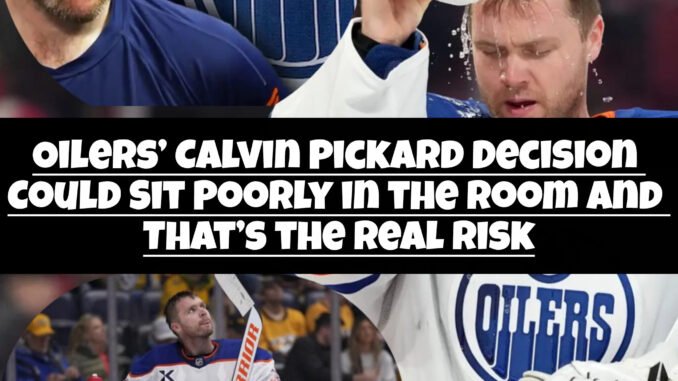
Oilers’ Calvin Pickard Decision Could Sit Poorly in the Room and That’s the Real Risk
The Edmonton Oilers are facing a tough situation that isn’t just about numbers or salaries. The choice they have to make regarding Calvin Pickard is more than a simple roster change — it tests how much trust they have among the players. If they make the wrong choice, the reactions could be more intense than fans think.
Pickard has done everything the team has asked him to do. When things got messy in the goal, he stepped up. When he didn’t get much playing time, he remained professional. When there was a lot of stress, he kept his cool. His teammates noticed his efforts. The coaches believed in him. That’s important — or at least it should be.
Now, as the Oilers deal with contracts and aim for a championship window that feels both urgent and delicate, Pickard suddenly seems less valuable. He’s being seen more as a disposable piece rather than a reliable backup, and that sends a risky message: loyalty can be shaky, and being dependable doesn’t always earn you respect.
This isn’t just about whether Pickard will be the main goalie in the future. It’s about setting a standard. NHL locker rooms are always watching. When a player who has been “just what you needed” is quietly pushed aside, teammates start to wonder — not out loud, but internally. Who will be next? And why give up trust for a little more flexibility in the budget?
Yes, this is a business. Yes, the Oilers are going for something greater. But successful teams don’t just handle their budgets — they also manage the trust and belief among players. When players feel like they can be easily replaced, their commitment can start to fade.
If the Oilers decide to move on from Pickard without being open about it, the impact won’t be seen right away on the ice. Instead, it will appear later in team chemistry, confidence, and the slow breakdown of a group that should be united.
Unfortunately, tough decisions are sometimes necessary. But unnecessary ones? Those are the kind that stick around — and occasionally, they come back to cause problems at the worst times.
Leave a Reply